

Efficiency of Heating and Cooling Systems: Don’t Lose Your Cool

Why Energy Efficient Heating and Cooling Systems Matter for Your Home and Wallet
Energy efficient heating and cooling systems are the single biggest lever you can pull to cut your home’s energy bills — and the impact is hard to ignore.
Quick answer: The most efficient heating and cooling options available today include:
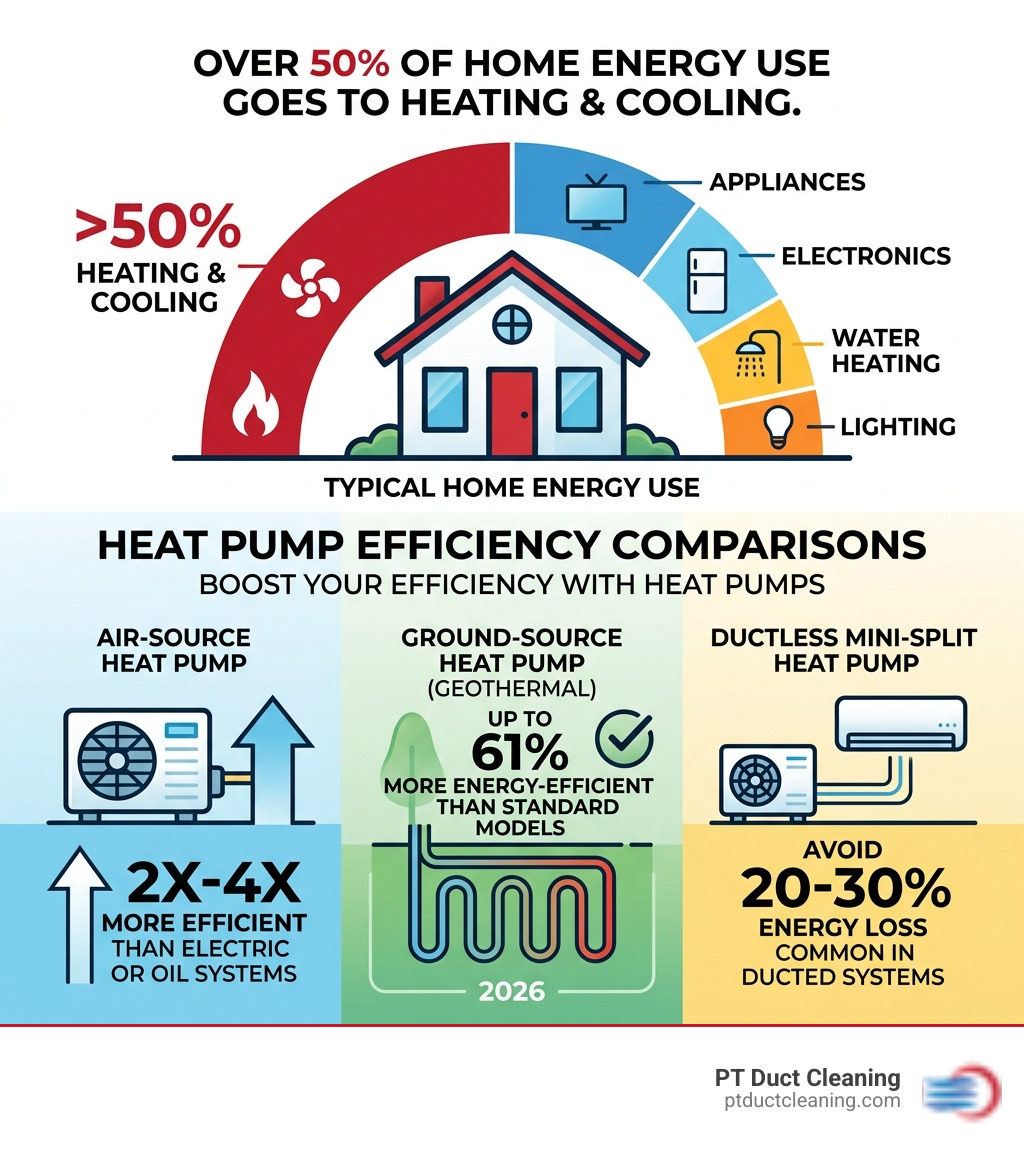
- Air-source heat pumps – 2–4x more efficient than traditional electric or oil systems
- Ground-source (geothermal) heat pumps – up to 61% more energy-efficient than standard models
- Ductless mini-split heat pumps – avoid the 20–30% energy loss common in ducted systems
- High-efficiency gas furnaces (90%+ AFUE) – convert 90 cents of every dollar of fuel into usable heat
- Hybrid/dual-fuel systems – combine a heat pump with a gas furnace for year-round efficiency
Here’s the uncomfortable truth: more than half of your home’s total energy use goes straight to heating and cooling. That’s not a rounding error — it’s the dominant line item on your utility bill, every single month.
For Chicago-area homeowners, this hits especially hard. Heating season can run from October through April. Every inefficient cycle your HVAC system runs — every dirty filter, every undersized duct, every aging furnace — costs you money and comfort.
The good news? The technology available in 2026 is dramatically better than what most homes are currently running. Heat pumps now outsell gas furnaces in the U.S. — over 5 million units sold in 2024 alone — and modern systems can slash your heating costs by up to 75% compared to electric resistance heating.
This guide breaks down everything you need to know: how these systems work, what ratings actually matter, what installation really costs, and how to make the smartest upgrade decision for your Chicago-area home.
Understanding Energy Efficient Heating and Cooling Systems
When we talk about energy efficient heating and cooling systems, we are looking at technology that does more with less. In the past, HVAC systems were “dumb” boxes that simply burned fuel or used massive amounts of electricity to create a change in temperature. Today, we focus on moving heat rather than just creating it.
As of April 2026, the landscape of home comfort has shifted. Nearly half of the energy used in your home goes to heating and cooling. By upgrading to modern units, you can reduce electricity use for heating by up to 75% compared to older electric resistance furnaces or baseboard heaters. This isn’t just about being “green”; it’s about keeping your hard-earned money from flying out of your vents.
Switching to an air-source heat pump can trim your household carbon dioxide emissions by about 40% compared to a standard gas furnace. If you are looking to modernize your home, starting with Installation New Energy Saving Units is the most effective way to see an immediate drop in your monthly overhead.

Rebates and Savings for Energy Efficient Heating and Cooling Systems
One of the biggest hurdles for homeowners is the upfront cost of high-efficiency equipment. However, in 2026, the incentives have never been stronger. For our neighbors in the Chicago area and across Illinois, programs like the HVAC – Ameren Illinois Energy Efficiency Program offer significant rebates for upgrading to qualifying equipment.
Beyond local utility rebates, federal tax credits can cover a substantial portion of heat pump installations. On average, simply replacing old, failing equipment with ENERGY STAR certified models can cut your annual energy bill by nearly $140. If you opt for a high-efficiency geothermal system, those savings can jump to 30–60% on heating and 20–50% on cooling costs immediately.
The Mechanics of Modern Heat Pumps and Hybrid Systems
How does a single machine provide both ice-cold air in July and cozy warmth in January? It’s all about heat transfer. Think of a heat pump like your refrigerator, but reversible. In the summer, it pulls heat from inside your home and dumps it outside. In the winter, it finds heat energy in the outdoor air (yes, even when it’s cold!) and pumps it into your living room.
Because they move heat instead of generating it through combustion or resistance, heat pumps are typically two to four times more efficient than traditional systems. For those who aren’t ready to go fully electric, we often recommend a hybrid or “dual-fuel” setup. This pairs a high-efficiency heat pump with a gas furnace. The heat pump handles the “mild” cold, and the gas furnace kicks in only when Chicago temperatures take a nose dive into the negatives. You can learn more about how these integrate during a Furnace Installation Chicago All You Need to Know consultation.
Types of Heat Pumps: Ducted vs. Ductless Mini-Splits
Not every home is built the same, which is why we see two primary configurations:
- Ducted Systems: These use your home’s existing network of air ducts. They are ideal for whole-home replacements where the ductwork is already in good shape.
- Ductless Mini-Splits: These are perfect for homes without ducts or for room additions. They consist of an outdoor compressor and one or more indoor air-handling units.
The major advantage of ductless systems is that they avoid the 20–30% energy loss that typically occurs in ductwork due to leaks or poor insulation. Furthermore, they allow for “zone control,” meaning you aren’t paying to heat the guest room you only use twice a year. Modern units, such as the Lennox SL25XPV, utilize variable-speed compressors that adjust their output like a dimmer switch, rather than just clicking on and off at 100% power.
Cold-Climate Performance and Dual-Fuel Solutions
A common myth we hear in Park Ridge and Chicago is that “heat pumps don’t work in the cold.” While that might have been true twenty years ago, 2026 technology has changed the game. Cold-climate heat pumps are now engineered to provide reliable warmth even when it is -20°F outside.
These systems use Electronic Refrigerant Injection (ERI) to boost heating output in extreme temperatures. However, for total peace of mind in Illinois winters, many homeowners opt for a hybrid system. This ensures that if we hit a record-breaking polar vortex, your gas furnace is there as a reliable backup, while the heat pump saves you money during the other 95% of the heating season.
Decoding Efficiency Ratings: SEER, HSPF, and AFUE
When shopping for energy efficient heating and cooling systems, the alphabet soup of ratings can be confusing. Here is the breakdown of what you need to look for to ensure you’re getting a top-tier system.
| Rating | What it Measures | What to Look For (2026 Standards) |
|---|---|---|
| SEER2 | Seasonal Energy Efficiency Ratio (Cooling) | 18 to 24+ |
| HSPF2 | Heating Seasonal Performance Factor (Heating) | 9.0 to 11.8+ |
| AFUE | Annual Fuel Utilization Efficiency (Furnaces) | 90% to 98% |
For cooling, a higher SEER2 rating means more comfort for less electricity. The Lennox EL21KLV offers a SEER2 of up to 21, making it a powerhouse for summer efficiency. For heating, the HSPF2 is the key metric for heat pumps. If you are looking at gas furnaces, the AFUE tells you what percentage of fuel is actually turned into heat. An 80% AFUE furnace wastes 20 cents of every dollar through the chimney, while a 98% model wastes almost nothing.
Always look for the ENERGY STAR “Most Efficient” designation. These units meet the strictest EPA standards for energy savings and environmental protection. You can explore various options on our HVAC Services Brands Models page or check out the EL18KSLV Most Efficient Heat Pump for a prime example of high-performance tech.
Installation and Maintenance for Peak Performance
You could buy the most expensive, efficient system on the market, but if it’s installed poorly, you might as well be throwing money out the window. According to Department of Energy data, nearly 70–90% of HVAC installations have significant defects, primarily due to improper sizing or leaky ducts.
Proper installation starts with a Manual J calculation. This is a professional protocol used to determine the exact heating and cooling load of your specific home based on square footage, insulation, and window orientation. An oversized system will “short cycle,” turning on and off too rapidly, which wears out components and kills efficiency. Conversely, an undersized system will run forever without ever making you comfortable.
We also emphasize the importance of duct integrity. Sealing and insulating ducts can improve the efficiency of your heating and cooling system by as much as 20%. If you are in the city, our Air Conditioning Installation Chicago team ensures that every connection is airtight before we finish the job.
The Role of Smart Thermostats in Energy Efficient Heating and Cooling Systems
The “brain” of your HVAC system is the thermostat. Modern energy efficient heating and cooling systems work best when paired with smart, communicating thermostats like the Lennox S40. These devices do more than just let you change the temperature from your phone; they provide proactive diagnostics and automatic adjustments.
A smart thermostat can save the average homeowner about $100 a year by adjusting temperatures when the house is empty. Furthermore, they can manage humidity levels and coordinate variable-capacity systems to run at the lowest, most efficient speed possible to maintain a steady environment. This eliminates the “hot and cold” swings common with older, single-stage equipment.
Frequently Asked Questions about Energy Efficient HVAC
How do I determine the right system size for my home?
Never guess based on your old unit’s size. Your HVAC contractor should perform a Manual J load calculation. This takes into account your home’s airtightness, insulation levels, the number of windows, and even the direction your house faces. Proper sizing prevents the “cycling” issues that lead to high bills and early equipment failure.
What maintenance is required for high-efficiency systems?
Efficiency requires airflow. You should check your air filters every month and change them at least every three months—more often if you have pets. Additionally, annual professional tune-ups are essential. We check refrigerant levels, clean the coils, and ensure the condensate drains are clear. A dirty coil can force a system to work 20% harder to provide the same amount of cooling.
How long do energy-efficient heat pumps and furnaces last?
With proper maintenance, an air-source heat pump typically lasts about 15 years. Ground-source (geothermal) units can last 25 years or more, with the underground loops often lasting over 50 years. High-efficiency gas furnaces generally have a lifespan of about 20 years. Regular servicing is the single biggest factor in reaching these milestones.
Conclusion
Investing in energy efficient heating and cooling systems is one of the smartest financial moves you can make for your home in 2026. Between the immediate reduction in utility bills, the available tax credits, and the superior comfort of variable-speed technology, the ROI is clear.
At PT Duct Cleaning, we have extensive experience with all HVAC systems, from the latest Lennox SL22KLV Heat Pump to custom hybrid configurations. Whether you are in Park Ridge or the heart of Chicago, we are here to help you optimize your home’s air quality and energy use. Don’t let your money disappear into inefficient vents—upgrade to a system that works as hard as you do.
For More info about HVAC services in Chicago, reach out to our team today and let’s get your home running at peak efficiency.