

Why Every Home Needs a Regular Pellet Stove Chimney Sweep
Understanding the Pellet Stove Chimney Sweep Process
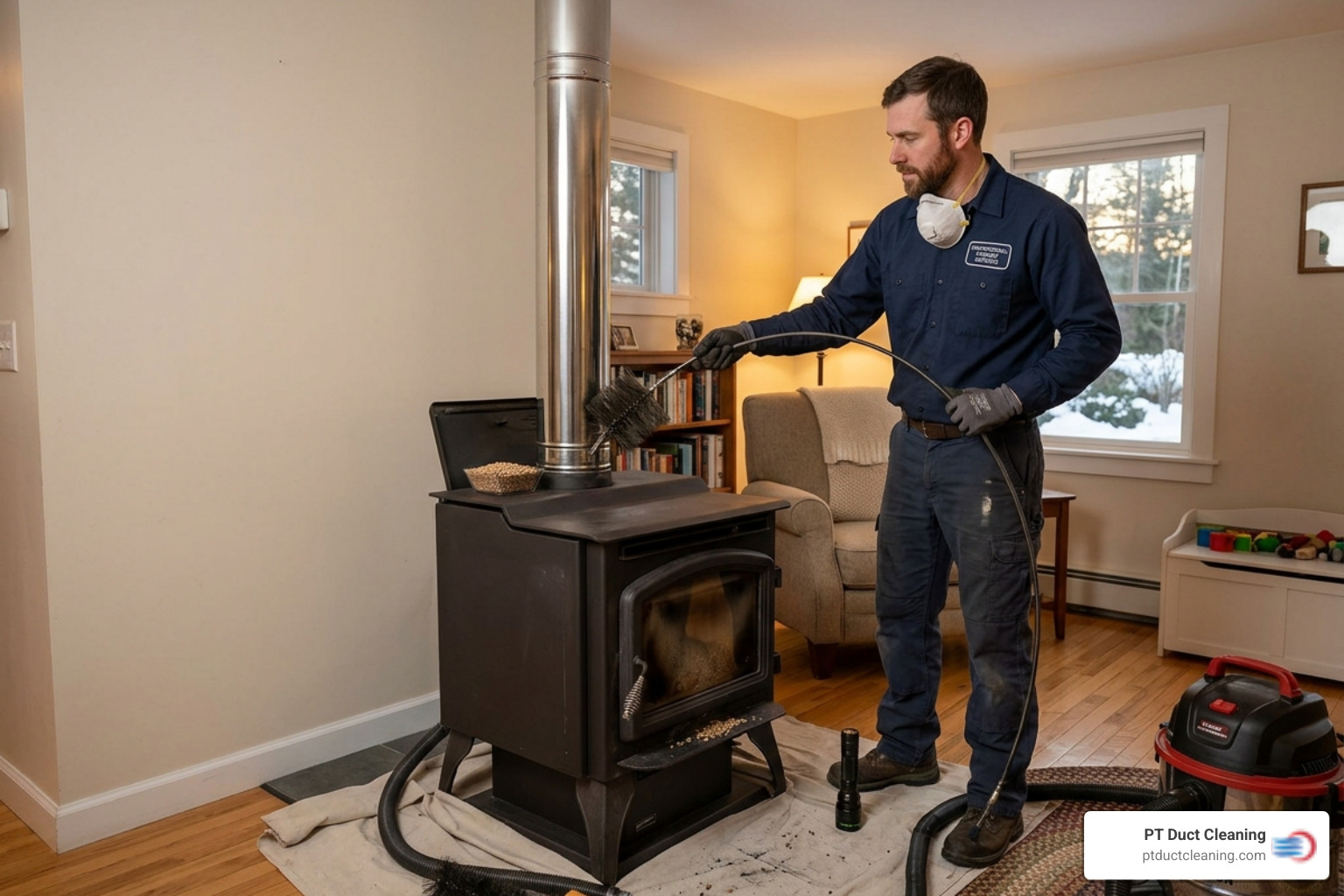
When we talk about a pellet stove chimney sweep, we aren’t just talking about a person with a top hat and a brush. For a modern pellet stove, the process is a highly technical maintenance routine designed to handle the unique physics of biomass combustion. Unlike traditional wood stoves that rely on a “natural draft” (hot air rising), pellet stoves use a mechanical combustion blower to force exhaust gases out.
This creates “positive pressure” within the venting system. Because the exhaust is being pushed rather than pulled, the vent pipes must be perfectly sealed. Most pellet stoves utilize a specialized flue pipe that is only 3 to 4 inches in diameter. Because these pipes are so narrow, even a small amount of fly ash accumulation can significantly restrict airflow.
A professional pellet stove chimney sweep involves more than just brushing the pipe. It requires a deep dive into the “guts” of the machine. According to experts at Annual Pellet Stove Cleaning | We Help With Your Pellet Stove’s Efficiency, a comprehensive service includes breaking down the internal baffles and cleaning the hidden chambers where ash loves to hide.
Key Components Cleaned During a Pellet Stove Chimney Sweep
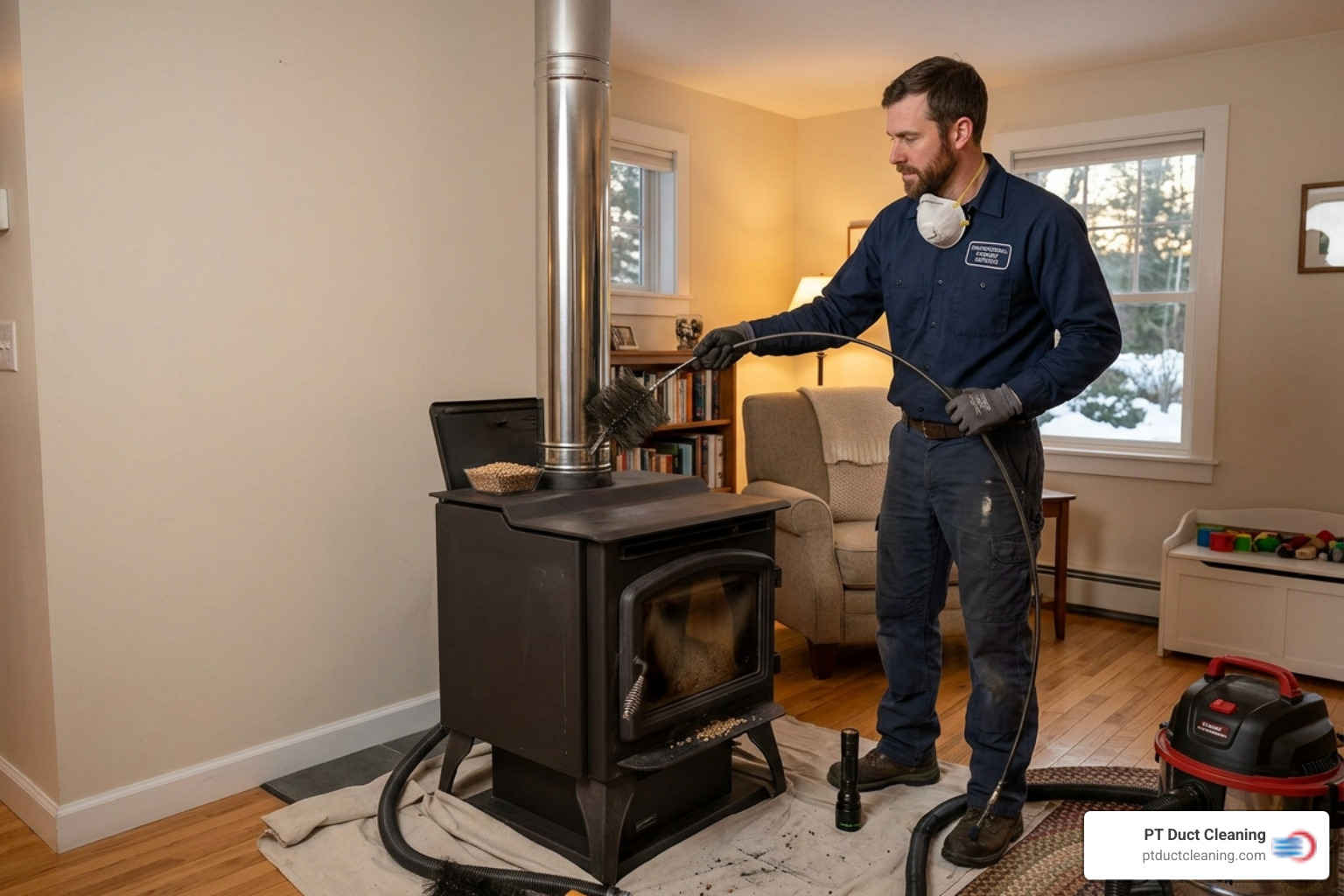
To ensure your home in the Chicago area stays safe and warm, we look at several critical areas during a full service:
- Exhaust Pipes and Flue: This is the core of the sweep. We use flexible rotary brushes to navigate the 90-degree elbows and horizontal runs where “ash traps” form.
- Clean-out Tee: Most installations include a “T” shaped pipe behind the stove. This is a primary collection point for heavy ash and must be emptied and brushed.
- The Firebox and Burn Pot: We scrape away “clinkers” (hardened ash deposits) that block the air holes in the burn pot, which can cause the stove to fail during ignition.
- Heat Exchanger: These are the tubes or fins that transfer heat into your room. If they are coated in soot, your stove will run hot internally but leave your living room chilly.
- Blower Motors: Both the combustion blower (which pushes exhaust out) and the distribution blower (which pushes heat into the room) need to be vacuumed and sometimes lubricated. Dust on these blades slows them down and causes premature motor failure.
- Sensors and Switches: Components like the “Proof of Fire” switch and pressure sensors are wiped clean to ensure the stove’s computer receives accurate data.
Frequency and Signs Your System Needs Service
One of the most common questions we hear in Park Ridge and across Illinois is: “How often do I really need to do this?” The answer depends on how much you use the stove and the quality of the fuel you buy.
The general industry standard is to have a professional pellet stove chimney sweep performed after every 1 to 2 tons of pellets burned. For a typical Chicago winter, this usually equates to once per year. However, if you are burning lower-grade pellets with high ash content, you might need a mid-season touch-up.
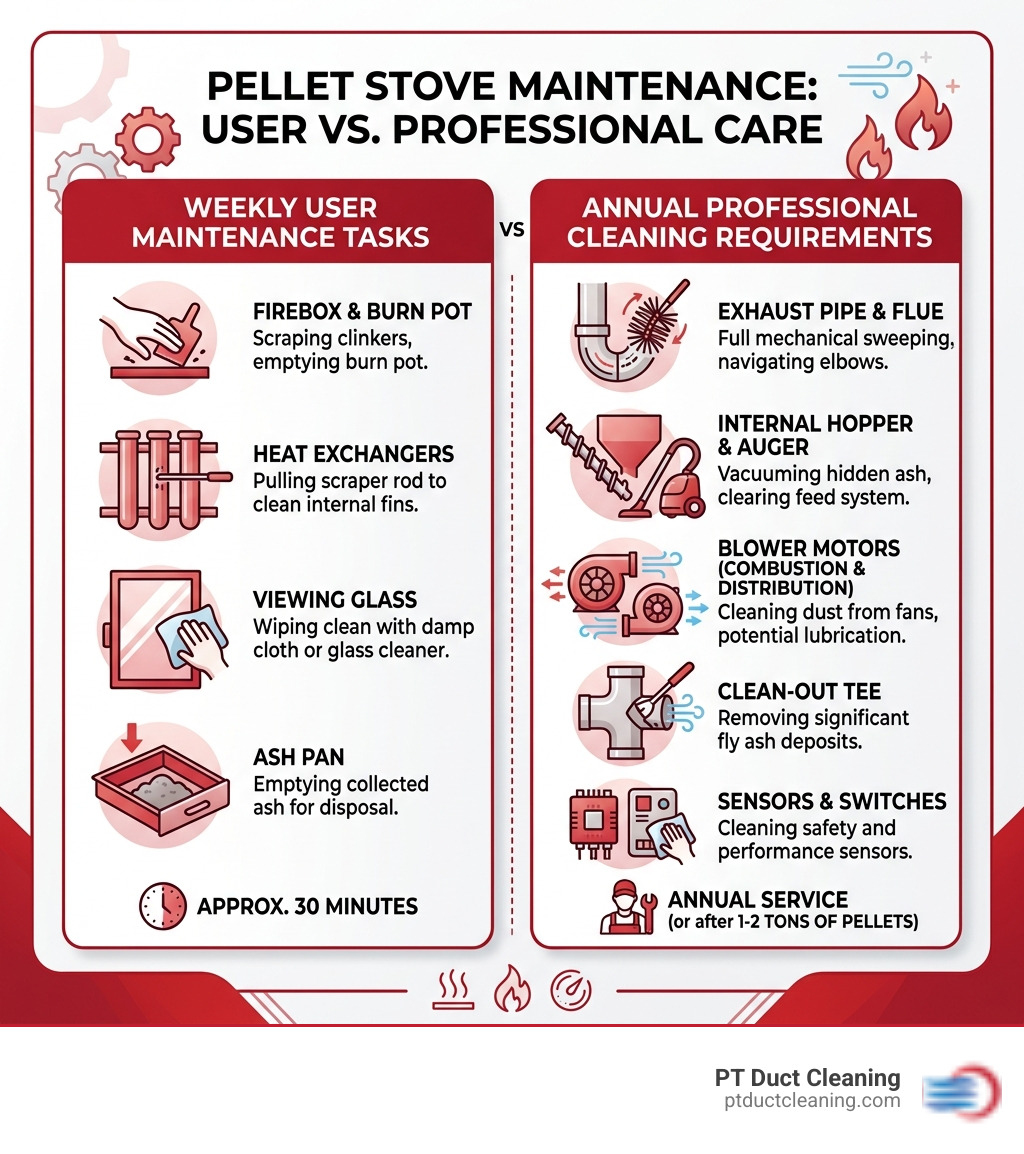
If you aren’t tracking your pellet tonnage, keep a close eye out for these warning signs cited by Chimney Cleaning for Pellet Stoves: The Complete Maintenance Guide:
- A “Lazy” Orange Flame: A healthy pellet flame should be bright yellow and active (like a blowtorch). A dark orange, flickering flame usually means the stove is gasping for air due to a clogged vent.
- Soot Buildup on the Glass: While some ash is normal, heavy black soot that covers the glass within hours of cleaning is a sign of poor combustion.
- The Smell of Smoke: Because these are positive-pressure systems, any smell of smoke in the room indicates a leak or a significant blockage in the exhaust path.
- Noisy Blower Motors: If you hear whistling, grinding, or a change in the pitch of the fans, it’s often due to ash imbalance on the fan blades.
When to Schedule Your Pellet Stove Chimney Sweep
As of April 2026, we are encouraging homeowners to think ahead. The absolute best time to schedule your maintenance is during the off-season (spring or summer).
Why? First, availability is much better. Once the first Chicago frost hits in October, chimney sweep schedules fill up instantly. Second, and more importantly, fly ash is hygroscopic and acidic. This means that if you leave ash sitting in your flue over a humid Illinois summer, it absorbs moisture from the air and turns into a corrosive paste. This paste can eat through stainless steel liners and cause expensive damage while the stove is sitting idle.
Performing your “spring cleaning” in May or June protects your investment and ensures you are ready to flip the switch the moment the temperature drops. For more details on timing, check out More info about chimney cleaning services.
Professional vs. DIY: What You Need to Know
Can you clean your own pellet stove? The answer is: partially.
We always encourage homeowners to handle the “Level 1” maintenance. This includes vacuuming the cold firebox weekly, cleaning the glass, and emptying the ash pan. However, a full pellet stove chimney sweep involves risks that go beyond a standard vacuum.
Neglecting the deep cleaning of the venting system can lead to serious safety risks, including carbon monoxide (CO) poisoning. Because pellet stoves are mechanical, a failure in the venting seal or a blockage in the narrow 3-inch pipe can force odorless, colorless CO into your home. Professionals follow NFPA 211 standards, ensuring that every connection is airtight and every safety sensor is functional.
For those in the Chicago area looking for professional help with their hearth, you can find More info about fireplace cleaning in Chicago to see how we handle these complex systems.
Benefits of a Professional Pellet Stove Chimney Sweep
Hiring a pro isn’t just about avoiding the mess; it’s about the longevity of your appliance.
- Improved Efficiency: A clean stove uses fewer pellets to produce the same amount of heat, potentially saving you $50–$100 in fuel costs over a season.
- Extended Lifespan: By removing the strain on the blower motors and preventing corrosion in the flue, you can add years to the life of your stove.
- Expert Inspection: A certified technician can spot a failing auger motor or a frayed wiring harness before it leaves you without heat during a January blizzard.
Essential Tools for a DIY Pellet Stove Chimney Sweep
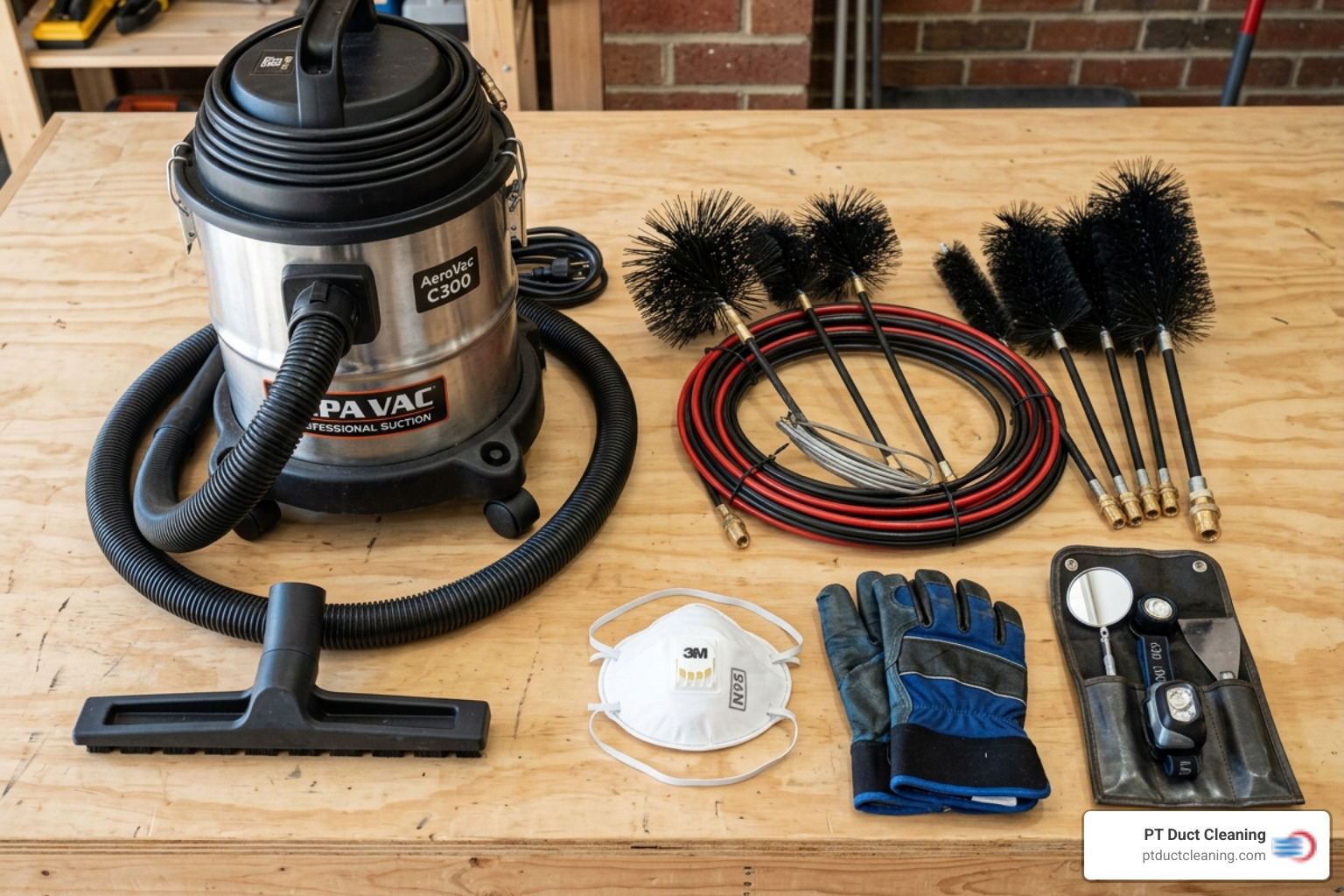
If you are committed to performing light vent cleaning yourself, you need the right gear. A standard shop vac is not enough—the fine fly ash will blow right through the filter and coat your living room in gray dust.
Recommended DIY tools include:
- Poly Filament Brush: According to A Sweep Above The Rest, you should only use nylon or poly brushes. Wire brushes can scratch and damage the thin walls of stainless steel pellet vents.
- Flexible Rods: You’ll need rods that can navigate 45 and 90-degree bends without snapping.
- Ash Vacuum: These feature specialized HEPA filters designed specifically for the microscopic particles found in pellet ash.
- Personal Protective Equipment (PPE): Always wear a N95 mask and gloves. Pellet ash is an irritant and shouldn’t be inhaled.
The Impact of Fuel Quality on Maintenance
Not all pellets are created equal. If you find yourself needing a pellet stove chimney sweep more often than usual, look at your fuel.
We recommend only using pellets that carry the Pellet Fuels Institute (PFI) Quality Mark.
- Premium-Grade Pellets: These contain less than 1% ash content (some as low as 0.5%). They burn hotter and leave behind significantly less fly ash.
- Standard or Utility-Grade Pellets: These have higher bark content, leading to more ash and the formation of “clinkers”—heavy, glass-like deposits that block airflow in the burn pot.
In our experience serving the Chicago area, switching to a premium softwood pellet can often double the time between required cleanings. For more on how maintenance keeps your system running smoothly, see More info about chimney services in Chicago.
Frequently Asked Questions about Pellet Stove Maintenance
How much does a professional pellet stove chimney sweep cost?
In the current market, you can expect to pay between $175 and $350 for a professional service. The price varies based on whether you have a freestanding stove or an insert, and how long it has been since the last cleaning. A standard service takes anywhere from 30 minutes to 3 hours. While it might seem like an added expense, it is far cheaper than replacing a $400 combustion motor or a $2,000 flue liner.
How does pellet venting differ from traditional wood chimneys?
Traditional wood chimneys rely on a “natural draft” and usually have 6 to 8-inch diameters. Pellet vents are much smaller (3-4 inches) and are sealed systems designed to handle the pressure of a fan. Because the exhaust is cooler than a wood fire, it doesn’t create the same heavy creosote, but it produces a much higher volume of fine fly ash that can “settle” in horizontal sections of the pipe.
What are the risks of neglecting my pellet stove vent?
The primary risks are fire and poisoning. While pellet stoves don’t produce as much creosote as wood, it can still form if the stove is burning inefficiently. Additionally, acidic ash buildup can cause the vent pipe to perforate, allowing exhaust to leak. Finally, a blocked vent can cause a “smoke-back” incident, where the hopper fills with smoke, potentially igniting the fuel supply.
Conclusion
A pellet stove is a fantastic, eco-friendly way to heat your home, but it is not a “set it and forget it” appliance. Regular maintenance is the key to keeping your home safe and your heating bills low. By performing weekly ash removal and scheduling a professional pellet stove chimney sweep at least once a year, you ensure that your system operates at peak performance through the toughest Illinois winters.
At PT Duct Cleaning, we are proud to be the Chicago HVAC experts you can trust for residential safety and air quality. Whether you are in the heart of the city or out in Park Ridge, we are here to help you breathe easier.
For more information on how we can help keep your home’s heating system in top shape, visit More info about our professional chimney services.