

Stop the Lint Fire Before It Starts
Your Dryer Vent Is a Hidden Fire Hazard — Here’s What to Do
If you need to get dryer vent cleaned, here’s the short answer:
- Schedule professional cleaning once a year (every 6 months for large families, pet owners, or heavy dryer use)
- Watch for these warning signs: clothes taking too long to dry, a burning smell, a hot dryer exterior, or a steamy laundry room
- Cost: typically $100–$185 for professional service
- Time: most cleanings take 45–60 minutes
- DIY is possible for simple setups, but professional cleaning is safer and more thorough
Most homeowners never think about their dryer vent — until something goes wrong.
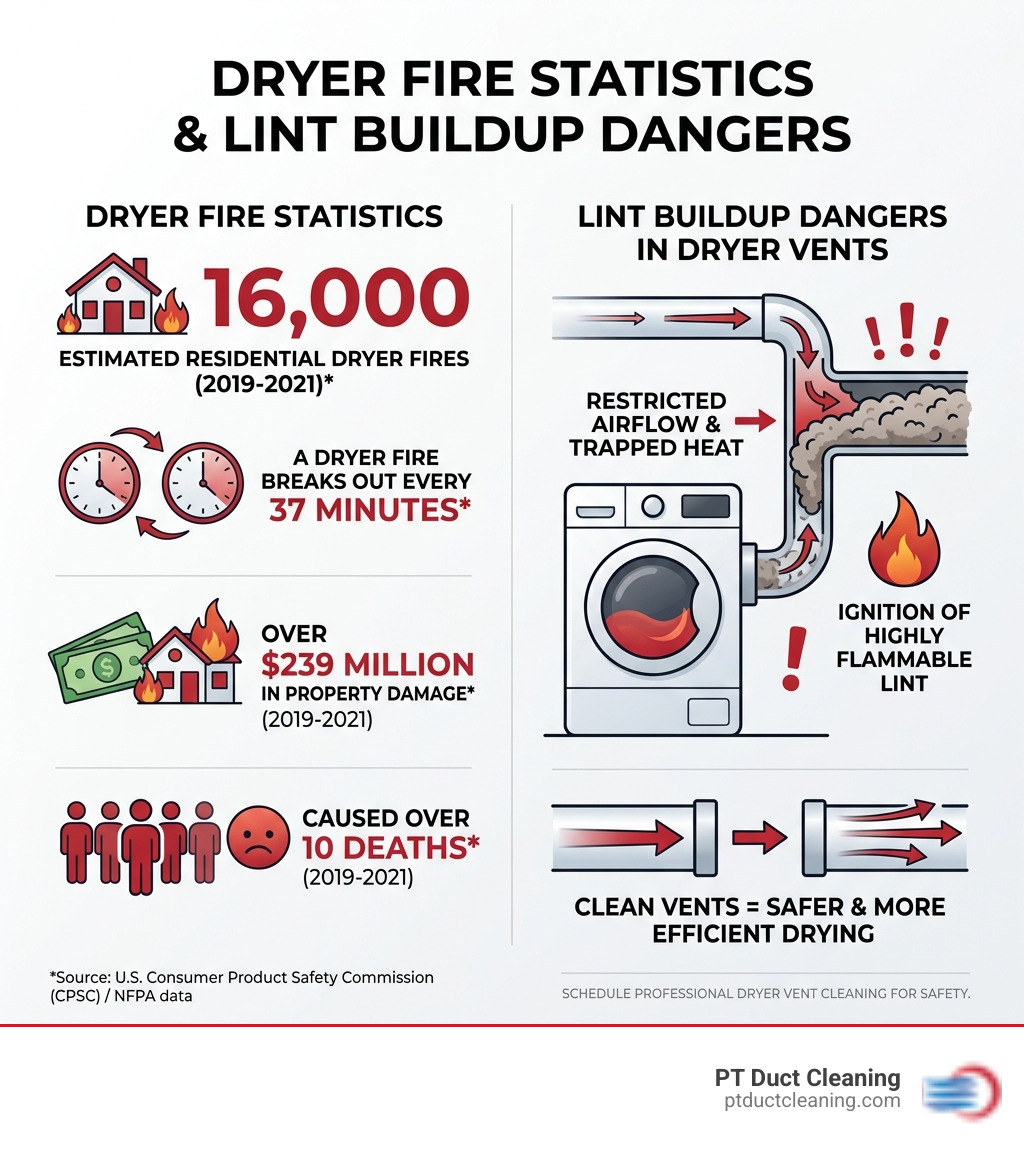
Here’s a number worth knowing: a dryer fire breaks out somewhere in the U.S. every 37 minutes, according to the National Fire Protection Association. Between 2019 and 2021, dryer fires caused over $239 million in property damage, 10 deaths, and roughly 16,000 residential fires, according to the Consumer Product Safety Commission. The leading cause? Not cleaning the dryer vent.
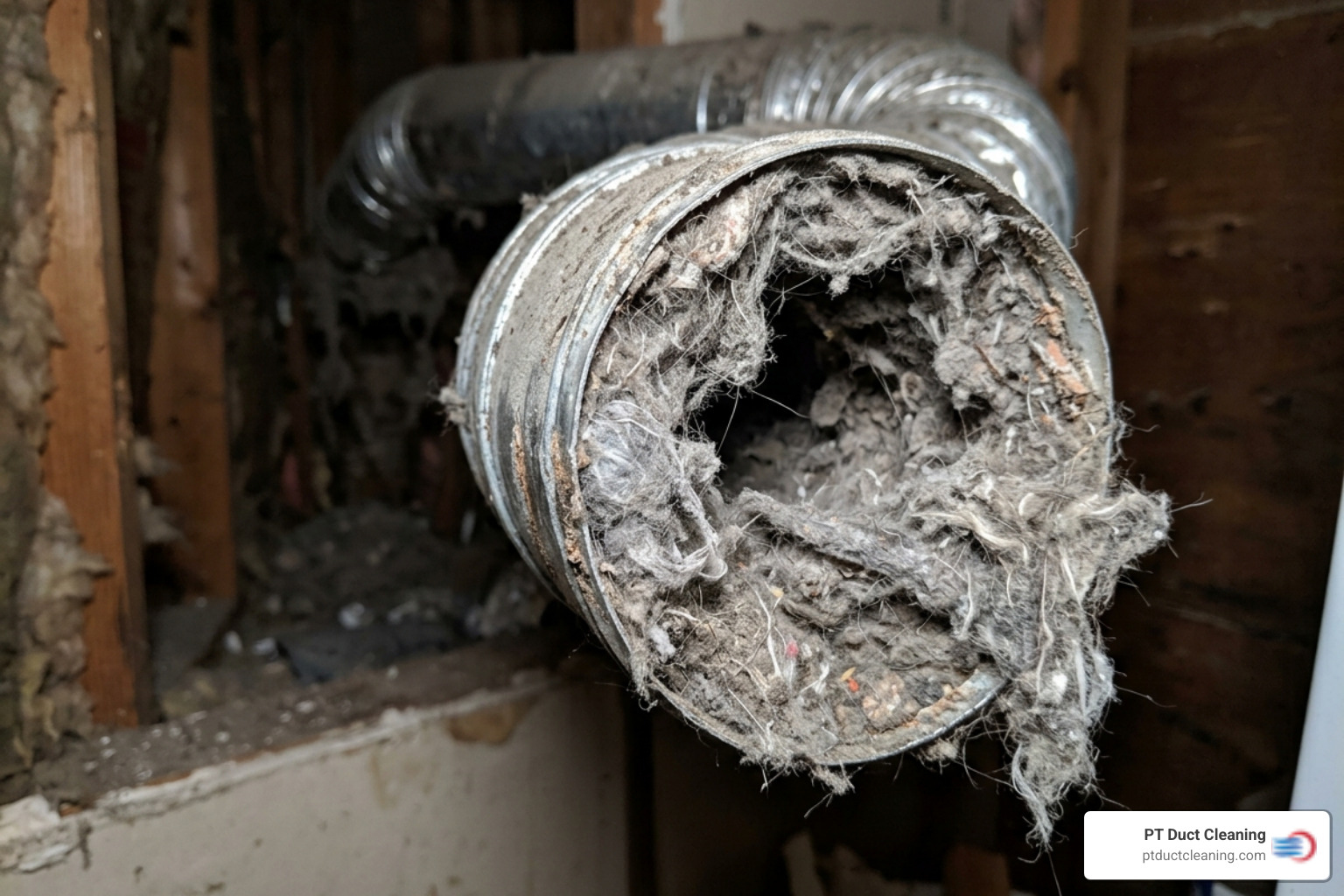
Lint is surprisingly flammable. It builds up inside your vent with every single load — quietly, invisibly — until it restricts airflow, traps heat, and creates the conditions for a fire.
If you live in the Chicago area and you can’t remember the last time your dryer vent was cleaned, you’re not alone. And this guide will show you exactly what to do about it.
Why You Must Get Dryer Vent Cleaned for Safety and Efficiency
When we talk to our neighbors in Chicago and Park Ridge about their HVAC systems, the dryer vent is often the most neglected part of the home. But understanding why you need to get dryer vent cleaned is about more than just avoiding a chore; it’s about protecting your home and your wallet.
Fire Hazards and Residential Safety
The statistics are sobering. The Consumer Product Safety Commission attributes 16,000 residential fires annually to dryers, and the leading cause is a failure to clean them. Lint is the perfect fuel; it is lightweight, highly combustible, and sits right next to a heating element. When airflow is restricted, heat builds up until that lint ignites. By ensuring you get your dryer vent cleaned for safety and efficiency, you are removing the primary fuel source for a potential house fire.
Energy Consumption and Appliance Lifespan
A clogged vent is an efficiency killer. If your dryer has to run for two cycles to dry a single load of towels, you are paying double the energy costs for that laundry. A clean vent can reduce drying times by up to 20%. Furthermore, restricted airflow causes the dryer to run hotter and longer, which puts immense strain on the heating element, thermal fuses, and bearings. Regular maintenance doesn’t just save on the electric bill; it prevents the premature death of an expensive appliance.
Carbon Monoxide and Moisture Risks
For our customers with gas dryers, a clogged vent is a health hazard. If the exhaust path is blocked, carbon monoxide—a colorless, odorless, and deadly gas—can back up into your laundry room. Additionally, dryers expel about a half-gallon of moisture per load. If that moist air can’t escape, it settles in your walls and ductwork, leading to mold and mildew growth. We always remind our clients that cleaning dryer vents every 1-3 years can prevent you from fire in your house and protect your indoor air quality.
Warning Signs and Recommended Frequency
Your dryer is actually very good at telling you when it’s struggling. You just have to know what to listen (and smell) for.
When to Get Dryer Vent Cleaned: Frequency and Timing
As we move through April 2026, many Chicagoans are starting their spring cleaning. This is the perfect time for annual maintenance.
- The Gold Standard: Most households should get dryer vent cleaned at least once per year.
- The 6-Month Rule: If you have a large family, multiple pets that shed, or you find yourself running the dryer more than five times a week, you should move to a 6-month schedule.
- The “New Clothes” Factor: Believe it or not, if you buy a lot of new towels or fuzzy clothing, you’ll produce more lint. Check your vent more often during these times.
According to experts at Angi on how often to clean your dryer vent, consistency is key to preventing the “snowball effect” where a small amount of lint traps even more debris.
Recognizing the Need to Get Dryer Vent Cleaned Immediately
If you notice any of the following, stop using the dryer and call us immediately:
- Longer Drying Times: If a standard load takes more than 35–40 minutes to dry, the vent is likely restricted.
- Excessive Heat: If the top of the dryer or the laundry room feels like a sauna, the heat isn’t escaping.
- The Burning Smell: This is an emergency. It means lint is already scorching.
- The Flap Test: Go outside while the dryer is running. If the exterior vent flap isn’t opening wide or you don’t feel a strong breeze, there’s a blockage.
- Humidity: If your laundry room walls are damp or the windows are fogging up during a cycle, that half-gallon of moisture is trapped inside.
Professional Cleaning Process vs. DIY Methods
While there are plenty of “as seen on TV” brush kits, there is a significant difference between a surface-level sweep and a professional-grade cleaning.
The Professional Advantage
When we arrive at a home in the Chicago area, we don’t just stick a vacuum in the hole. Our process is comprehensive:
- Inspection: We assess the vent material (looking for dangerous plastic or foil) and use cameras if a major blockage is suspected.
- Airflow Measurement: We use tools to measure static pressure before and after. This proves the vent is actually clear.
- Rotary Brushing: We use specialized, flexible rods with rotating brush heads that navigate the 90-degree turns in your walls without getting stuck or damaging the duct.
- High-Power Extraction: We use HEPA-filtered vacuums to ensure that as we dislodge the lint, it is sucked out of the home rather than pushed further in.
DIY vs. Professional Cleaning Comparison
| Feature | DIY Method | Professional Service (PT Duct Cleaning) |
|---|---|---|
| Tools | Vacuum attachments, hand brushes | Rotary brushes, air whips, HEPA vacuums |
| Reach | Usually only the first 3–5 feet | The entire length (even up to 40+ feet) |
| Safety | Risk of puncturing duct or getting brush stuck | Controlled, insured, and code-compliant |
| Effectiveness | Removes loose surface lint | Removes compacted, “baked-on” lint |
| Cost | $20–$50 for a kit | $100–$185 (average) |
For many, the DIY route seems tempting, but we’ve seen many cases where a DIY brush gets disconnected inside a wall, turning a $150 cleaning into a $1,000 wall repair. For a thorough job, it’s often best to get professional vent cleaning.
Choosing a Pro to Get Dryer Vent Cleaned in Chicago
In a city as big as Chicago, you have options. When looking for a service, ensure they have extensive experience with local building codes. Many older Chicago homes have complex vent routings that go through crawlspaces or up to the roof. We pride ourselves on our local expertise and our ability to handle everything from branded modern dryers to custom HVAC setups.
Maintenance Tips to Prevent Future Clogs
Once you get dryer vent cleaned, you want to keep it that way for as long as possible. Here is our expert checklist for daily and monthly maintenance.
- Clean the Lint Trap Every Load: This is non-negotiable. It is your first line of defense.
- Wash the Screen Monthly: Dryer sheets leave a waxy film on the screen that restricts air. Scrub it with warm soapy water and a soft brush once a month.
- Check the Moisture Sensor: Those little metal bars inside the drum can get coated in dryer sheet residue, making the dryer run longer than necessary. Wipe them with a cotton ball and rubbing alcohol.
- Upgrade Your Ductwork: If you have a white plastic “accordion” hose behind your dryer, replace it immediately with a rigid metal duct. Plastic is a fire trap and sags, creating “bellies” where lint collects.
- Use Aluminum Tape: Never use “duct tape” on dryer ducts (ironic, we know). Heat causes duct tape to dry out and fail. Use UL-listed aluminum foil tape.
- Mind the Gap: Don’t push your dryer so far back against the wall that you crush the transition hose. This is one of the most common causes of immediate airflow restriction.
Frequently Asked Questions about Dryer Vent Maintenance
How long does a professional dryer vent cleaning take?
For a standard residential home in the Chicago area, the process usually takes between 45 and 60 minutes. If the vent is on the second floor or exhausts through the roof, it may take slightly longer to set up the safety equipment.
Can I use a leaf blower to clean my dryer vent?
We strongly advise against this. While it might seem like a “life hack,” a leaf blower provides high volume but low focused pressure. It often just compacts the lint into a hard “plug” further down the line or, worse, blows the joints of your ductwork apart inside your walls.
What is the average cost of professional dryer vent cleaning?
In April 2026, the typical range for a professional cleaning is between $100 and $185. Factors that can increase the price include vents longer than 15 feet, vents that exit through the roof, or if birds have built a nest inside the line (which requires removal and a new guard installation).
Conclusion
Taking the time to get dryer vent cleaned is one of the most cost-effective ways to protect your family and your home. Between the fire safety benefits and the immediate energy savings, the service practically pays for itself within a few months.
At PT Duct Cleaning, we’ve seen how a simple cleaning can prevent a disaster. Whether you’re in downtown Chicago, Park Ridge, or the surrounding suburbs, our team is ready to help you breathe easier and dry faster. Don’t wait for the “burning smell” to tell you there’s a problem.
Schedule Your Professional Dryer Vent Cleaning Today and stop the lint fire before it starts.