

Should You Get Vents Cleaned or Just Relax?
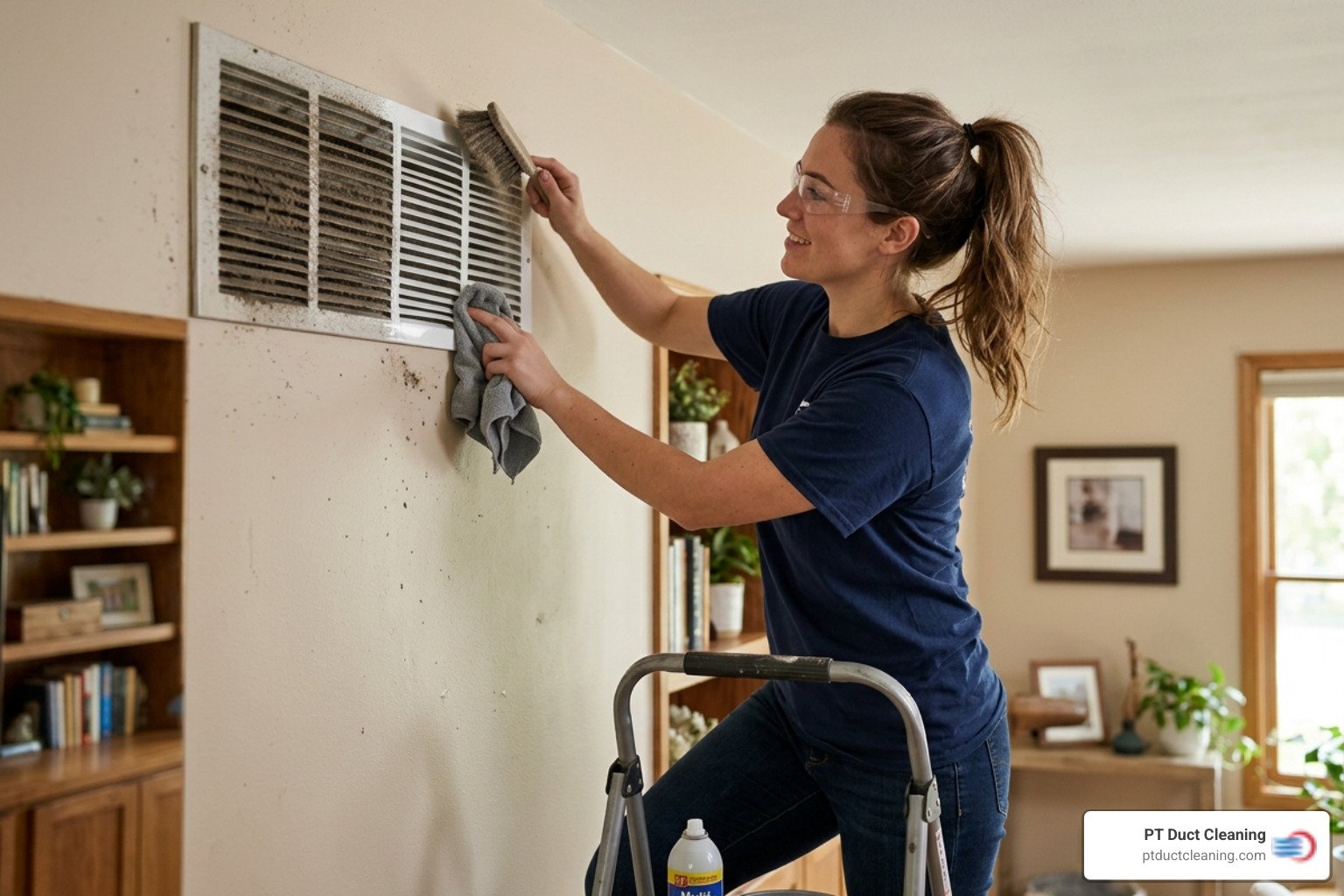
Is Cleaning Your Vents Actually Worth It?
Cleaning your vents is one of the most overlooked home maintenance tasks — but it has a direct impact on your air quality, energy bills, and HVAC lifespan.
Here’s the short answer on what you need to know:
| Task | How Often | Who Does It |
|---|---|---|
| Light dusting of vent covers | Monthly | DIY |
| Deep clean of vent covers | 1-2 times per year | DIY |
| HVAC filter replacement | Every 1-3 months | DIY |
| Full air duct cleaning | Every 3-5 years | Professional |
| Dryer vent cleaning | Once a year | DIY or Professional |
The average family generates around 40 pounds of dust every year. That dust — along with pet dander, pollen, mold spores, and other particles — moves through your home’s ductwork every time your HVAC system runs. Over time, it builds up on vent covers, inside ducts, and across HVAC components.
The EPA has identified indoor air pollution as one of the top five risks to public health. And for Chicago-area homeowners dealing with cold winters, humid summers, and year-round HVAC use, dirty vents aren’t just an aesthetic problem — they’re a health and safety concern.
This guide breaks down exactly what you need to do, how often, and when it’s time to stop DIYing and call a pro.
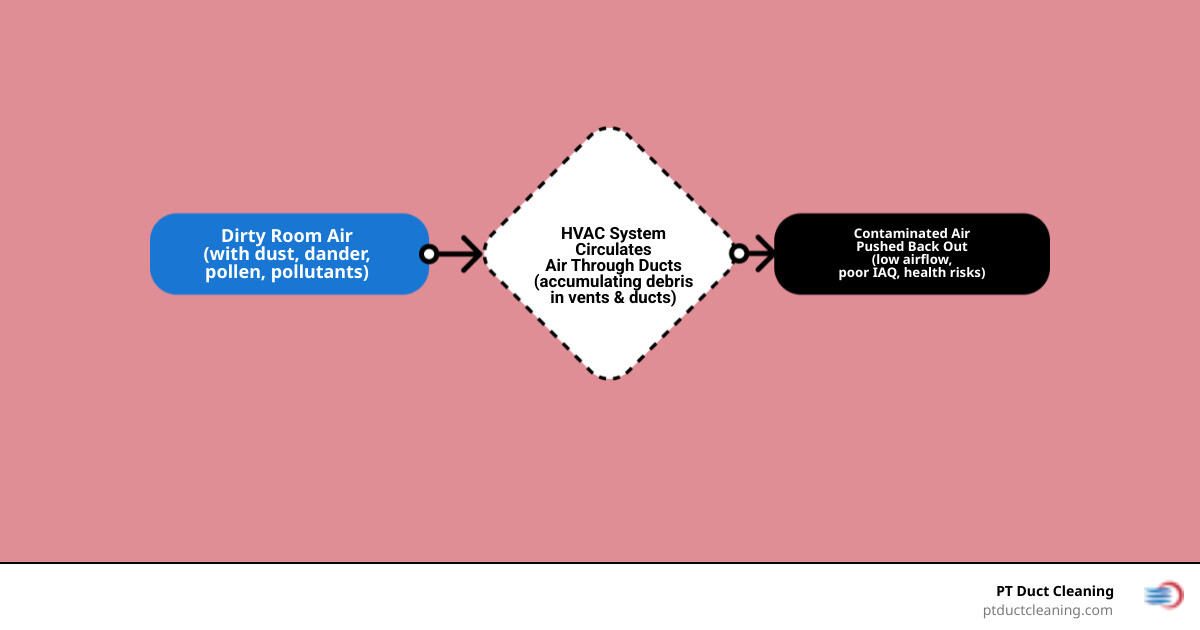
Why Air Hygiene is a Top Public Health Priority
In April 2026, we are more aware than ever of what we breathe. According to the Environmental Protection Agency (EPA), indoor air pollution is consistently ranked among the top five environmental risks to public health. This is a sobering statistic when you consider that most of us spend about 90% of our time indoors.
When we talk about cleaning your vents, we aren’t just talking about making the house look tidy for guests. We are talking about the lungs of your home. Your HVAC system pulls air from your rooms, heats or cools it, and pushes it back out. If the “veins” of this system—the ducts—are lined with years of skin cells, hair, and outdoor pollutants, you are essentially breathing through a dirty straw.
Why Air Duct Cleaning is Essential for Your Home and Business goes beyond simple aesthetics. For those in the Chicago area suffering from respiratory issues or allergies, these vents act as a reservoir for triggers. Furthermore, a clean system is an efficient system. When dust builds up on the internal components like the blower motor or cooling coils, the system has to work harder, leading to higher energy bills and a shorter equipment lifespan.
As noted by HowStuffWorks, maintaining these pathways ensures that the air you pay to condition actually reaches you, rather than getting trapped behind a wall of debris.
The Hidden Dangers of Neglected Dryer Vents
While air vents are about health, dryer vents are about survival. Failure to clean and maintain dryers is the leading cause of residential dryer fires in the United States. Every year, thousands of fires are sparked by something as simple as a buildup of lint.
Lint is highly flammable. When it clogs the exhaust vent, heat builds up inside the dryer drum. If that heat reaches the ignition point of the lint, a fire can spread through the vent pipe and into the walls of your home in seconds. Cleaning Dryer Vents Every 1-3 Years Can Prevent You From Fire In Your House is a rule we live by. At a minimum, we recommend a professional inspection and cleaning once a year to keep your family safe.
When to Take Action: Signs and Frequency
How do you know if you should be cleaning your vents today or if you can wait until next season? It helps to understand the difference between surface maintenance and deep system hygiene.
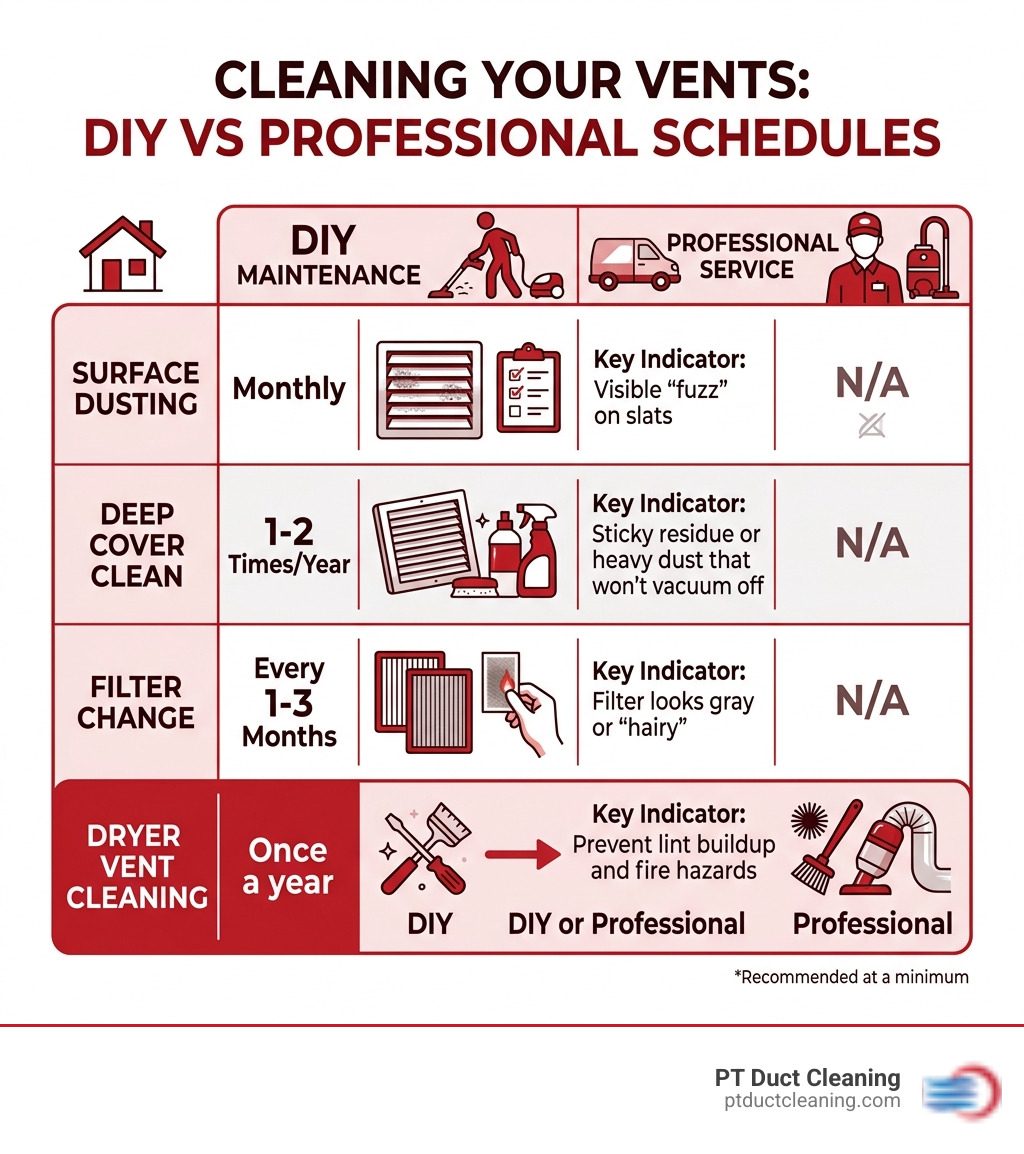
| Cleaning Level | Frequency | Key Indicators |
|---|---|---|
| Surface Dusting | Monthly | Visible “fuzz” on the slats of the vent cover. |
| Deep Cover Clean | 1-2 Times/Year | Sticky residue or heavy dust that won’t vacuum off. |
| Filter Change | Every 1-3 Months | Filter looks gray or “hairy” when held to light. |
| Pro Duct Cleaning | Every 3-5 Years | Persistent dust, musty smells, or post-renovation. |
The “40 pounds of dust” figure isn’t just a scare tactic; it’s the reality for the average American household. If you have pets that shed or live near a busy Chicago street with high pollen counts, that number can climb even higher. According to Martha Stewart, regular visual inspections are your best defense. If you see dust, it’s already in your lungs.
Identifying the Need for Cleaning Your Vents
Sometimes the signs aren’t just visible; they’re audible or olfactory. Here is what we tell our clients to look for:
- The “Dark Ring” Effect: If you notice dark, smudgy rings on the ceiling or wall around your air registers, that is a sign that the system is blowing out fine particulate matter.
- The Musty Odor: A “stale” or “dirty sock” smell when the AC or furnace kicks on often indicates biological growth or a heavy accumulation of damp dust inside the ducts.
- The Tissue Test: Take a single ply of toilet paper or a tissue and hold it up to a return vent (the one that sucks air in). If it doesn’t stay stuck to the grate by suction, your airflow is likely restricted by debris.
- Post-Renovation Dust: If you’ve recently done a remodel in Park Ridge or Chicago, drywall dust has almost certainly found its way into your system. This fine powder is notorious for clogging filters and coating duct interiors.
For a deeper dive into why these signs matter, check out 5 Air Duct Cleaning Benefits You Need to Know.
Step-by-Step Guide to Cleaning Your Vents
If you’ve decided to tackle the vent covers and the first few feet of your ductwork yourself, preparation is key. You don’t want to start cleaning your vents only to realize you’ve just pushed all the dust further into the system.
Tools You’ll Need
Before you start, gather these 7 Professional-Grade Air Duct Cleaning Tools (or their consumer-grade equivalents):
- A vacuum with a HEPA filter and a long hose attachment.
- A screwdriver (usually Phillips head) to remove vent covers.
- Microfiber cloths (they trap dust rather than just moving it around).
- A soft-bristled brush (an old toothbrush or a dish brush works great).
- Warm, soapy water (dish soap is perfect).
Best Practices for Cleaning Your Vents and Covers
Follow these steps to ensure a “pro-level” DIY job:
- Shut it Down: Turn off your HVAC system at the thermostat. You don’t want the fan kicking on while the cover is off, potentially sucking your cleaning cloth into the abyss or blowing dust into your face.
- Register Removal: Carefully unscrew the vent covers. If they are on the ceiling, have a partner hold the ladder.
- The Soak: If your covers are metal or plastic, take them to a sink or tub. Soak them in warm, soapy water for 15–20 minutes. This loosens the “grime” that standard dusting misses.
- Vacuum the Entrance: While the covers soak, use your vacuum hose to reach as far into the duct as possible. Be gentle—if you have flexible “accordion” style ducts, a heavy-handed vacuum can tear the lining.
- Wipe and Dry: Use a damp microfiber cloth to wipe the interior of the duct opening. As Air Central USA points out, you must ensure the vent covers are completely dry before putting them back. Wet grilles act like a magnet for new dust and can lead to rust.
- Reinstall: Screw the covers back on and give them one last wipe with a dry cloth.
When to Call in the Professionals
While DIY cleaning is great for monthly maintenance, it has its limits. A standard household vacuum can usually only reach 2 to 3 feet into a duct system that might be 150 feet long. That leaves 95% of the dust untouched.
You should consider Residential Air Duct Cleaning from a professional team like ours if:
- You Suspect Mold: If you see green or black fuzzy growth on your vents or inside the ducts, stop. DIYing mold can spread spores throughout your entire home. Professionals use EPA-registered antimicrobials and specialized containment.
- Pest Infestations: If you hear scurrying or find droppings in your vents, you need more than a vacuum. Rodents and insects leave behind dander and waste that require professional-grade sanitization.
- Complex Ductwork: Many Chicago homes have intricate, old duct systems that are easily damaged. We use mechanical agitation tools and high-powered compressed air to dislodge debris without harming the structure.
- The “Scam” Warning: Be wary of “blow-and-go” cleaners offering $99 whole-house specials. These are often Duct Cleaning Scams that do little more than what you can do with a shop vac. Real professional cleaning takes 4–6 hours and involves high-powered, truck-mounted negative pressure systems that meet NADCA standards.
Frequently Asked Questions about Vent Maintenance
Can I use a regular household vacuum for duct interiors?
You can, but it’s like using a toothbrush to clean a driveway. Household vacuums lack the static lift and hose length to reach the “trunk lines” where the bulk of the 40 pounds of annual dust settles. Furthermore, unless your vacuum has a true HEPA filter, you might just be sucking in large dust and blowing fine allergens back out through the exhaust.
How often should I change my HVAC filters?
The standard recommendation is every 1–3 months. However, if you live in a high-traffic area of Illinois or have three Golden Retrievers, you might need to check it every 30 days. Using high-quality filters is the best way to prevent the need for frequent cleaning your vents. We can help with Air and Furnace Filter Replacement if you aren’t sure which MERV rating is right for your specific furnace.
Does cleaning the vents really lower energy bills?
Yes. When your return vents are clogged, your system “suffocates.” It has to run longer and hotter to move air. By ensuring clear pathways and a clean heat exchanger, you reduce the mechanical strain on the system. While some debate the exact percentage of savings, there is no doubt that a clean system operates more efficiently than a dirty one. For a deeper look at the ROI, see Is Duct Cleaning a Waste of Money.
Conclusion
Cleaning your vents is a journey, not a destination. It starts with simple habits: using high-quality doormats to keep dirt out, vacuuming your floors weekly with a HEPA machine, and wiping down your registers every month. These small steps go a long way in preserving your indoor air quality and keeping your HVAC system humming.
However, even the most diligent homeowner eventually hits a wall that only professional equipment can scale. Whether you’ve just finished a renovation, moved into a new home, or simply realized it’s been five years since your last deep clean, we are here to help.
As Chicago’s HVAC and air quality experts, PT Duct Cleaning has the experience to handle everything from standard residential setups to complex commercial ventilation. Don’t let your home’s air quality be an afterthought.
Schedule Your Professional Vent Cleaning Today and breathe easier knowing the job was done right.